
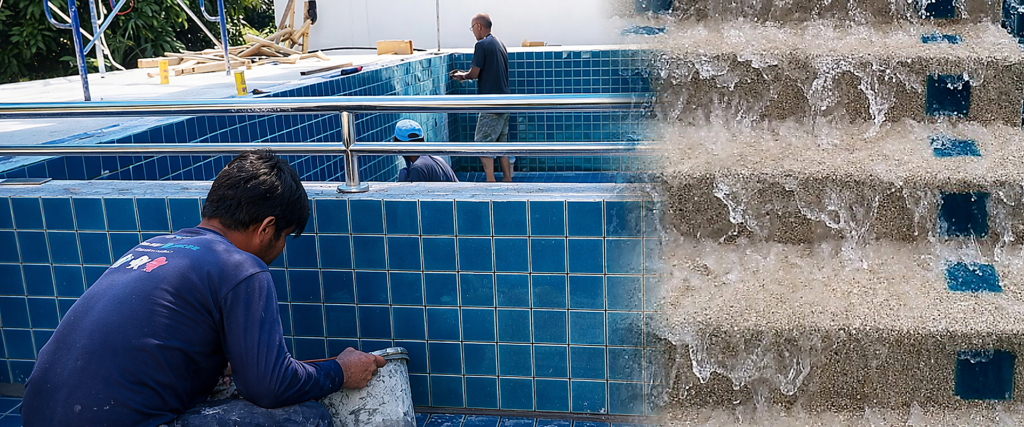
Pitfalls when buying a home in Thailand – especially during planning and construction
The biggest issues rarely show up in the photos – but in the details. Whether you buy a “ready home”, off-plan, or build new, mistakes in planning, the contract, and the construction phase can get expensive. Here’s a practical overview of the most common pitfalls – plus a concrete checklist you can use before you commit.
Want to see a real project at the same time (Scandinavian-style pool villas) and get a realistic rental scenario? Start here:
Tip: When you contact us, you can write “Pitfalls”, and we’ll send a document list + our recommended questions for the contract/build process.
60-second overview (before you commit)
- Get everything in writing: “What’s included?” (materials, fixtures, pool, garden, installations) must be stated in the specification/appendix.
- Pay by milestones: Avoid paying too much too early. The payment plan must match actual progress.
- Inspect along the way: Don’t wait for handover. Quality is ensured through ongoing checks + photo documentation.
- Handover with a defects list: A snag list + deadlines + retention are your best friends.
- If rental is the goal: Privacy, lighting, finish and an operating setup affect occupancy and price per night.
Want the full guide to the purchase process itself? See also: Buy a home in Thailand (guide).
Top 12 pitfalls (quick overview)
| Pitfall | Consequence | How to avoid it |
|---|---|---|
| Unclear specifications | You pay for “standard” but receive something else | Appendix with materials, dimensions, brands and finishes |
| Paying too much too early | You lose leverage if there are defects/delays | Milestone payments + retention |
| No change process | Upgrades become expensive and unclear | Variation orders with price and deadline |
| No ongoing inspections | Defects are discovered only at handover | Inspections along the way + photo log |
| Moisture/drainage underestimated | Mold, odors, damage and high maintenance | Focus on drainage, slope, ventilation and material choices |
| Pool system underestimated | Unclear operation, algae, leaks, costly repairs | Spec for equipment, tiles, leak test, service plan |
| Electrical/plumbing without standards | Unstable operation, faults, lower comfort | Clear standards + testing at handover |
| Handover without a snag list | Defects become “your problem” after payment | Handover protocol + defects list + deadlines |
| Renting not clarified | Restrictions or unexpected requirements | Get rental rules/operations described in writing |
| Operating costs surprise you | Lower net return | Realistic operating budget (garden/pool/cleaning) |
| Privacy ignored | Lower willingness to pay and occupancy | Screening, planting and layout |
| Overly optimistic timeline | Delays and extra costs | Build in buffer + incentives/consequences |
Planning phase: specifications, budget and expectations
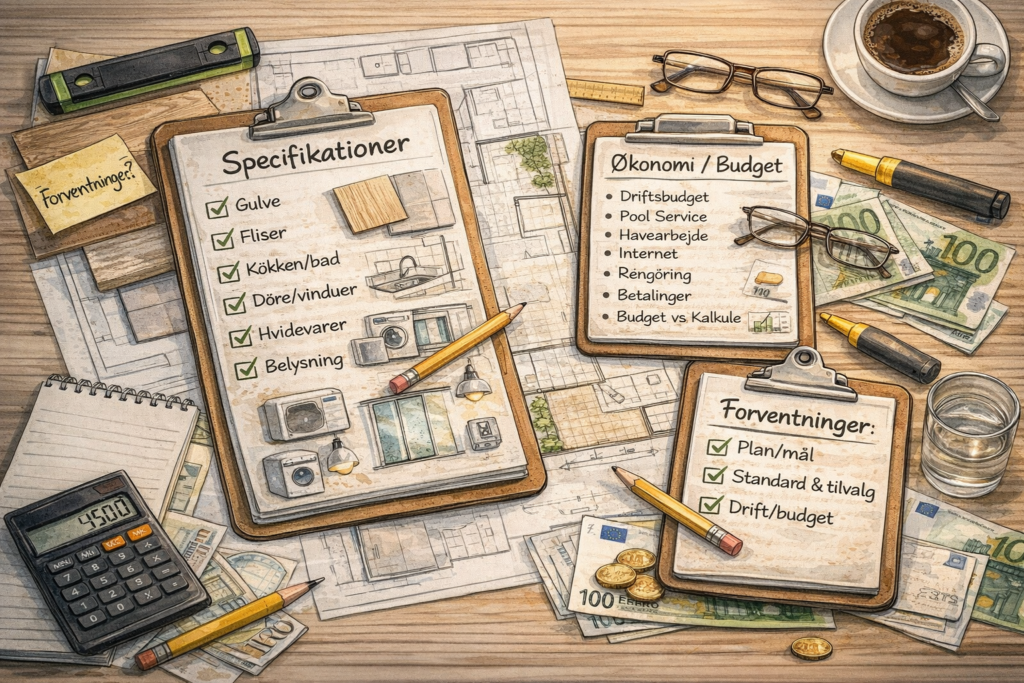
Most expensive problems start in the planning. If you want to avoid misunderstandings, you need a clear definition of what a “finished home” means – before you pay a deposit or sign anything.
- Specification (bill of materials): floors, tiles, kitchen/bath, windows/sliding doors, paint, lighting, aircon, appliances.
- Plans and dimensions: m², terraces, ceiling height, door widths, storage, technical room.
- What is “standard” – and what is an upgrade? Get a list so you understand the budget early.
- Operating costs from day 1: pool/garden service, internet, cleaning, security, insurance.
Want a clear picture of all ongoing costs? See: Costs of buying (taxes, fees, operations).
Define “finished home” in writing: specifications, dimensions and budget – including operations (pool/garden, cleaning, internet) from day 1.
Contract and payment plan: how to avoid paying too much too early
The contract isn’t only about price. It’s about risk. Especially with off-plan/construction, the payment schedule is often the most important point.
- Milestones: Payments are tied to concrete deliverables (e.g. completed pour, building closed in, installations, finishes, handover).
- Retention: A portion is held back until defects have been fixed.
- Changes (variation orders): Every change must have a price, a deadline and written approval (so you avoid “ongoing extra invoices”).
- Timeline + consequences: What happens if there are delays? (be realistic – but get it in writing)
- What’s included at “handover”: testing of electrical/plumbing, pool, aircon, water pressure, keys, manuals.
- Deposit/reservation: Don’t pay a “reservation fee” without getting appendices and terms in writing (specification, payment plan, timeline, rentals and handover). If you do pay, get a receipt + a precise description of what it entitles you to – and what happens if you cancel.
Considering leasehold? Then it’s even more important that rentals, transfer and terms are clearly stated. See: Leasehold in Thailand – pros/cons + checklist.
The developer and the project: due diligence before a deposit
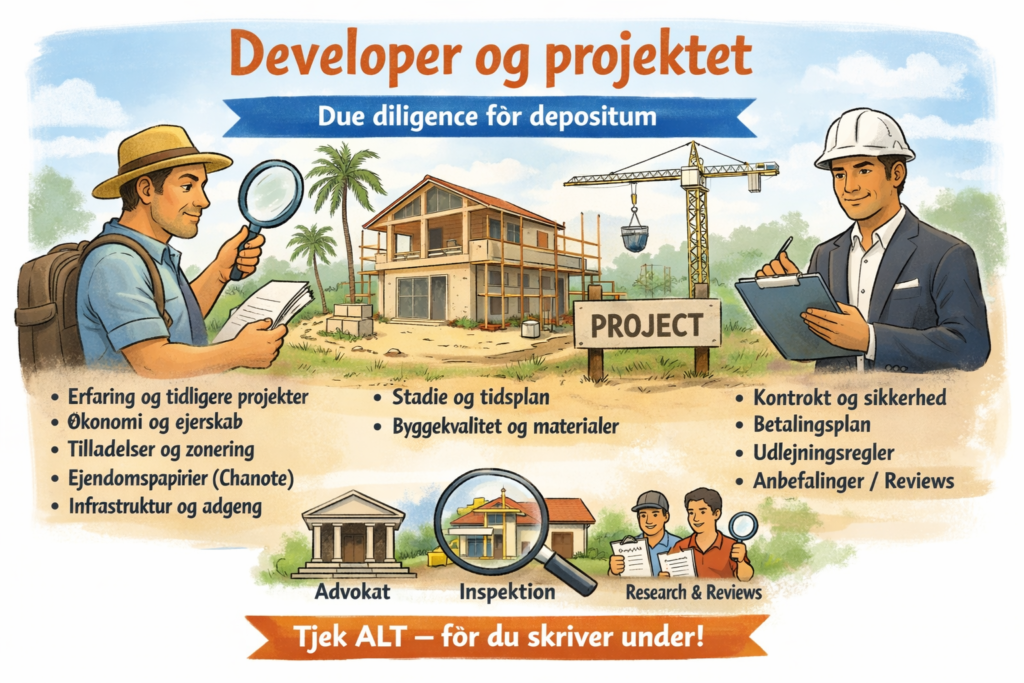
One of the most overlooked pitfalls is getting clarity on “the home” – but not on who you’re actually dealing with and what documents the project is truly based on. Spend 30 minutes on due diligence before you pay a deposit or sign.
- Track record: Review previous projects, completed deliveries and talk to former customers (if possible).
- Who is the counterparty? Who is on the contract (person/company), and who owns/manages the project in practice?
- What is promised? Everything that matters (finish, size, pool, garden, rentals, furnishing) must be in the contract/appendices – not only in a brochure, email or WhatsApp.
- Document package: Ask for a consolidated document list (contract, appendices, payment plan, timeline, rental rules, handover and warranty) before you pay more.
Practical rule: If something affects price, operations or rentals – it must be in writing and easy to document.
Construction phase: quality, materials and tropical conditions
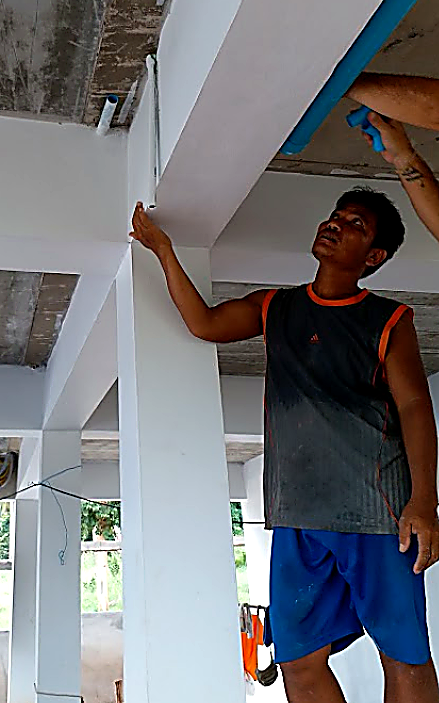
This is where the difference between “looks great in photos” and “holds up in real life” becomes clear. In Thailand, heat, humidity and heavy downpours are part of reality – so construction should be planned accordingly.
- Moisture and drainage: Ensure correct slope, drainage, drains and ventilation – especially around the pool and terraces.
- Windows/sliding doors: Quality tracks, seals and drainage are crucial for comfort and maintenance.
- Pool: Tiles/surface, watertightness, equipment, filter/chlorine/salt, service access and lighting should be specified.
- Electrical and plumbing: Testing, documentation and an “as-built” overview make it easier to operate and rent out.
- Documentation: A photo log during the build + checkpoints make defects cheaper to fix.
- “Small” details that often become expensive: slope on terraces, waterproofing/joints, silicone/transitions, drainage at sliding doors, and proper finishing at floor/wall.
A classic pitfall is waiting until handover: check quality, dimensions and finishes continuously – so defects are discovered while they’re still cheap to fix.
Permits and documentation: as-built, manuals and approvals
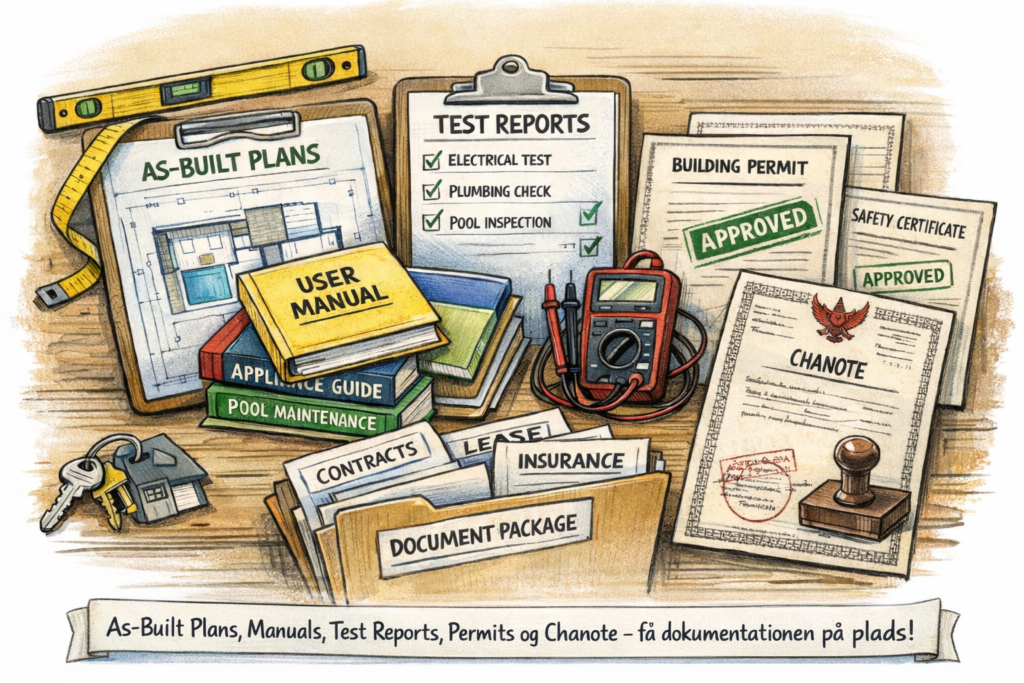
A home can look “finished” – but still be difficult to operate, repair or rent out if you don’t receive the right documentation. That’s why you should require a simple, practical document package that matches the home.
- As-built: Updated drawings/overviews of electrical, plumbing, drainage and equipment so future service isn’t guesswork.
- Tests and protocols: Function tests of aircon, hot water, water pressure, drains, electrics/lighting, internet and pool equipment (preferably documented).
- Manuals and service contacts: What needs servicing (pool/garden/aircon), how often, and who does it (including price range).
- Approvals/permits: Get it clarified in writing which relevant approvals exist for the project/construction (and what documentation you will receive).
Get the document package in place: as-built, manuals, tests and necessary approvals make operations, service and rentals much easier – and reduce the risk of costly surprises.
Tip: If rentals are part of the plan, documentation makes a huge difference: faster repairs, fewer operational issues and easier onboarding of service providers.
Handover: snag list, defects and “ready for rental”
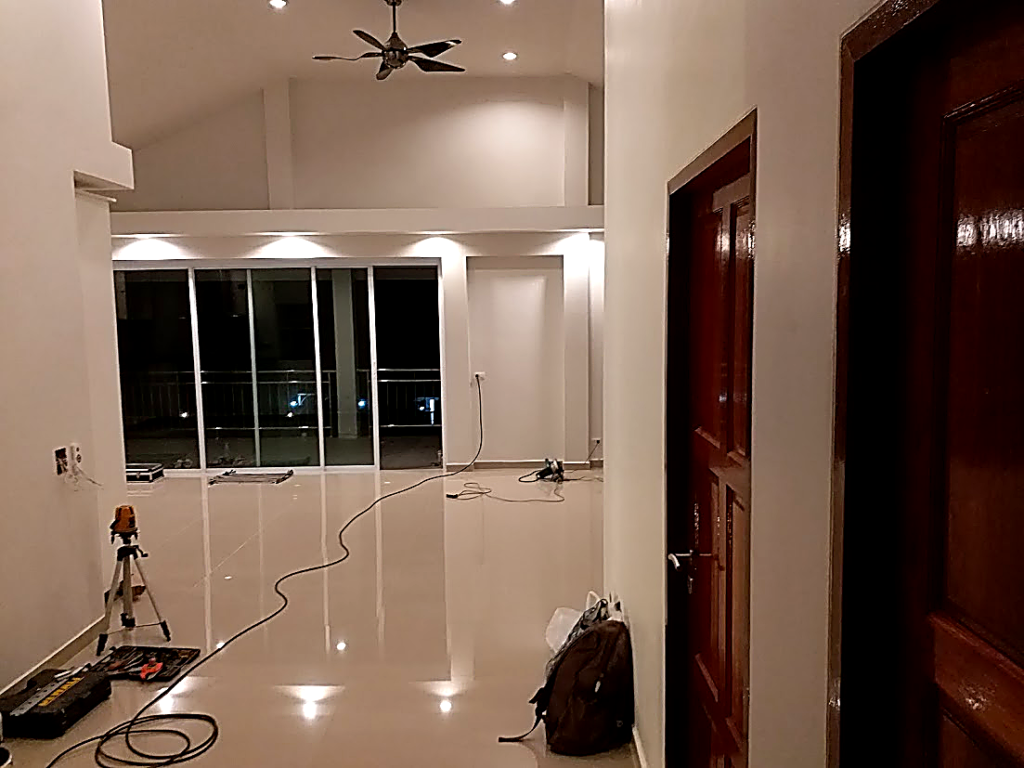
Handover isn’t “a day”. It’s a process. If the goal is rentals, the home must be operationally ready – not just “almost finished”.
- Snag list (defects list): Review all rooms + outdoor areas. Take photos and set deadlines.
- Function testing: aircon, hot water, water pressure, drains, outlets, lighting, internet, pool pump/equipment.
- Manuals and service: What needs maintenance? Who services the pool/garden, and what does it cost?
- Furnishing/turnkey: Check quality and durability – especially if you rent out.
Handover is about more than the finish: a snag list, function testing and documentation ensure the home is operationally ready – and ready for personal use/rentals.
If you plan to rent: occupancy, operations and privacy
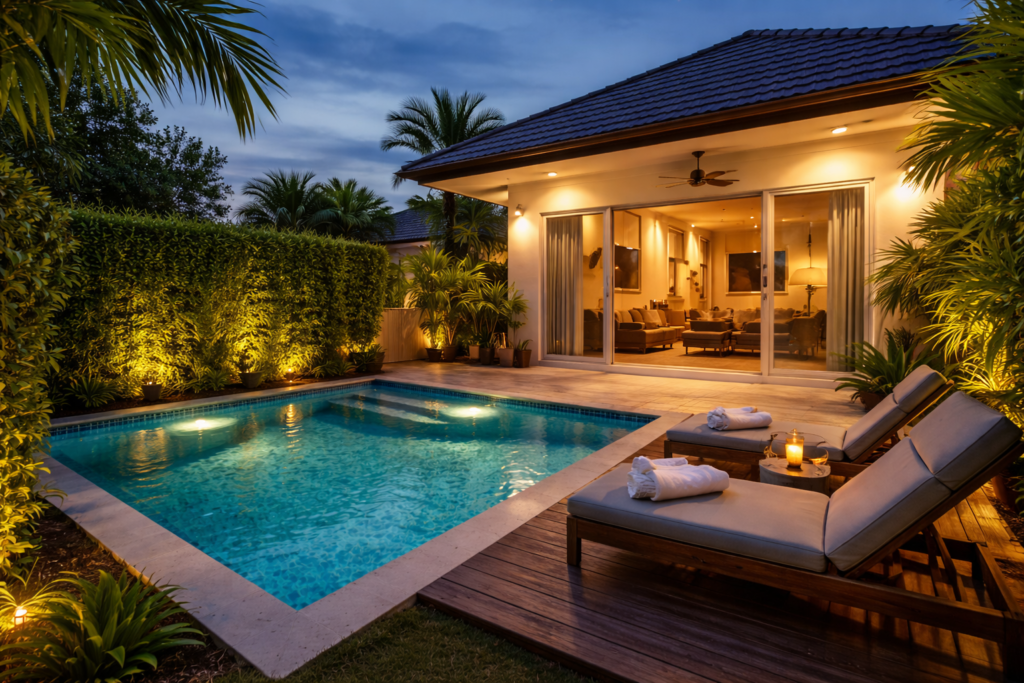
If rentals are part of the plan, think “hotel logic”: experience, privacy and operations. This affects both occupancy and price per night.
- Private pool: One of the strongest demand drivers.
- View and atmosphere: Lighting, layout and finishes often perform better in photos and convert better.
- Privacy: Screening, hedges/planting and great outdoor spaces increase willingness to pay.
- Operating setup: Cleaning, key handling, check-in and maintenance must be easy and reliable.
Rental terms (short/long-term) must be in writing: Clarify whether rentals are allowed, whether there are restrictions (short-term vs long-term), and who enforces the rules. It’s much easier to solve on paper before buying than afterwards.
Want a realistic scenario (seasons, occupancy, costs)? See: Renting in Thailand – realistic scenario + seasons.
Checklist: 25 questions before you sign
Use this list as a minimum – especially if construction/off-plan is involved. If any point is unclear: get it written in before you pay more.
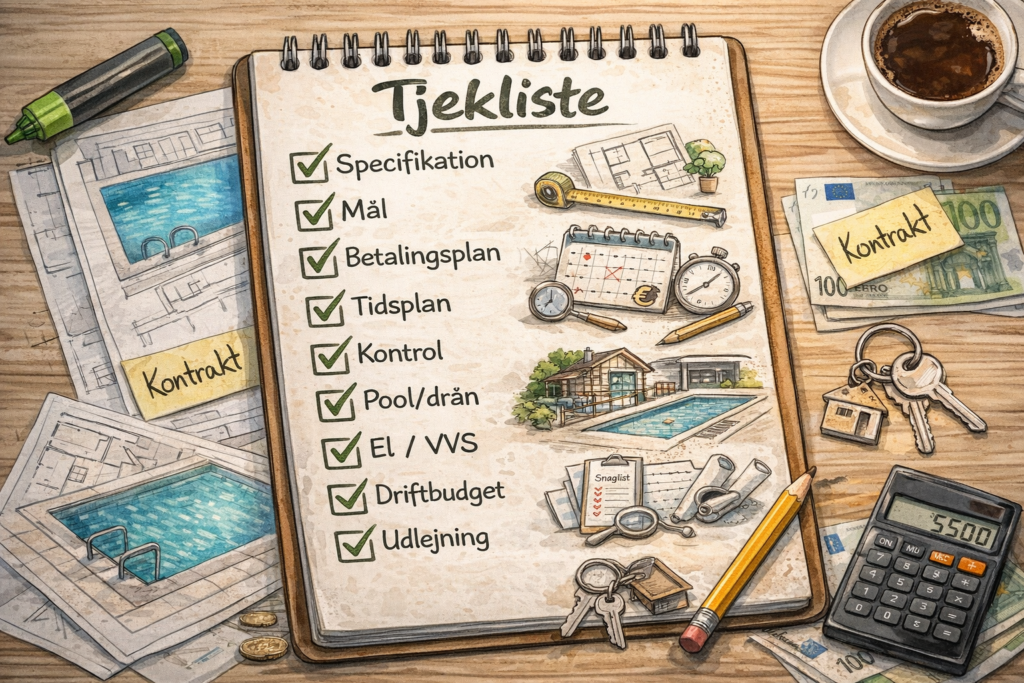
- Specifications: Do you have a complete list of materials, brands and finishes?
- Dimensions: Are all m², terraces and outdoor areas clearly described?
- Standard vs upgrades: What’s included – and what do upgrades cost?
- Payment plan: Is it tied to milestones and actual progress?
- Retention: Can you hold back an amount until defects are fixed?
- Timeline: What’s realistic, and what happens if there are delays?
- Changes: Is there a clear process for changes/variation orders?
- Inspections: Can you (or an advisor) inspect during the build?
- Moisture/drainage: How is drainage, slope and runoff handled around the pool/terraces?
- Pool: What equipment/surface, and who services it?
- Electrical/plumbing: What standard? Do you receive tests and documentation at handover?
- Handover: Is a snag list + repair deadlines part of the process?
- Warranty: What’s covered, for how long, and how are claims handled?
- Operating budget: Do you have a realistic budget for pool/garden/cleaning/internet?
- Rentals: Are rentals allowed, and are there restrictions (short/long-term)?
- Rental operations: Who handles check-in, cleaning and maintenance?
- Privacy: Is there screening (hedges/planting/layout) so outdoor spaces are “sellable”?
- Insurance: What do you need to insure yourself, and what might be covered jointly?
- Exit: Can you sell/transfer your agreement later? Under what terms?
- Documents: Which documents will you receive (contract, appendices, manuals, registration, etc.)?
Use a checklist before you commit: specifications, milestone payments, inspection points and operations – so you avoid the most expensive pitfalls.
Due diligence: what your lawyer and technical advisor should review
We always recommend independent advice. If construction/off-plan is involved, it often makes sense to combine a legal review with a technical inspection.
- Lawyer (legal): contract terms, payment plan, rentals/transfer, dispute resolution, documents and any registrations.
- Technical (build): specification, workmanship quality, moisture/drainage, electrical/plumbing, pool equipment, handover and snag list.
Want an overview of ownership/usage models before you decide? See also: Leasehold in Thailand and Buy a home in Thailand (guide).
FAQ: Pitfalls when buying/building in Thailand
Short answers to questions many ask when they want to avoid costly mistakes. (For specific purchases, we always recommend independent legal and technical advice.)
What are the most common pitfalls when buying a home in Thailand?
Unclear specifications, a payment plan that doesn’t follow milestones, lack of ongoing inspections, and a handover without a clear snag list. If rentals are the goal, unclear rules/operating setup is also a classic.
What should I pay extra attention to with off-plan/new builds in Thailand?
The payment plan (don’t pay too much too early), the change process (upgrades), quality control along the way, and a handover process with a snag list and deadlines. Get everything in writing in the contract and appendices.
How do I ensure quality during construction?
By making the specifications fully concrete (materials/finishes), setting ongoing checkpoints with photo documentation, and doing a thorough handover with a snag list. Don’t wait until the last day.
Are a private pool and privacy really important for rentals?
Yes, typically. A private pool, view/experience and screening around the terrace/pool often increase both interest and willingness to pay, which can affect occupancy and price per night.
Which documents should I have before I commit?
Contract + appendices (specification, drawings, payment plan, timeline), rental and operating rules, and clear agreements on handover, defects and warranty. With leasehold, it’s important that rental/transfer terms are stated clearly.
Can leasehold work as an investment if I want to rent out?
Leasehold can be a practical model, but rental depends on the contract and the project’s rules. Get rentals, operations and any restrictions described in writing before you decide.
What is a snag list, and why is it important?
A snag list is a defects list where you review the home and outdoor areas point by point, document issues with photos and set deadlines for fixes. It makes it much easier to get things corrected before final payment.
What does retention mean in a construction process?
Retention means holding back a portion of the payment until defects are fixed. It incentivizes proper completion and reduces the risk that you end up paying for fixes yourself.
What is a variation order (change order)?
A variation order is an agreed change/upgrade with a price, deadline and written approval. Without a clear process, “small changes” can quickly become expensive and unclear.
What should be tested at handover if the home will be rented out?
At minimum: aircon, hot water, water pressure, drains, outlets, lighting, internet, and the pool pump/equipment. Ideally, ask for simple documentation so operations are stable from day 1.
See real homes and pricing (main page)
Want to see real photos, price levels (DKK/EUR/THB), standard delivery and viewing options near Sattahip? Head to our main page – everything is gathered there.
Sources and useful links (English/Thai)
If you want to read more directly from legal sources and official authorities (especially relevant for leasehold, registration and local rules), these links may be useful:
- Siam Legal – Property Lease in Thailand (leasehold, registration, duration)
- Siam Legal – Thailand Property Legal Services (due diligence, contract review)
- Department of Local Administration (DLA) – local administration/municipalities (เทศบาล/อบต.)
Note: Building permits and local rules are typically handled by the local municipality (เทศบาล) or local authority (อบต.) – this can vary by area.