

Leasehold in Thailand – Pros/Cons + Checklist
Leasehold (long-term lease) is one of the most common ways for foreigners to secure the right to use a home in Thailand. Here you’ll get a practical walkthrough of the pros and cons, what you should pay attention to in the contract – and a concrete checklist you can use before you sign.
Leasehold in Thailand – in a nutshell
You get a right of use through a lease agreement (typically 30 years), which should be registered and clearly describe renewal, rentals and transfer. Many projects market “30+30+30” as “90 years”, but it is often a possibility to renew – not an automatic guarantee. That’s why the quality of the documents and your due diligence matter more than the number itself.
Want to see a concrete project where leasehold may be relevant – with a private pool, Scandinavian style and home sizes of 90–120 m² near Sattahip? Start here:
Tip: When you contact us, you can write “Leasehold guide” and we’ll send relevant examples and explain the setup for our project specifically.
What is leasehold in Thailand?
Leasehold is an agreement where you receive the right to use a home (and often an associated plot/area) for a longer period through a lease contract. For many foreign buyers, leasehold is a practical route to a stable base in Thailand when direct land ownership isn’t possible or desired.

How long is leasehold typically? In practice, the classic standard term in Thailand is often 30 years. Many projects also market models like 30 + 30 + 30 years (often referred to as “90 years”), but this is typically structured as a 30-year term with a possibility of renewal on specific conditions – which is why it’s crucial that both the renewal terms and any costs are completely clear in the contract.
Leasehold gives you the right to use a home in Thailand through a long-term lease – typically 30 years – and the level of security depends on the contract and registration.
The most important thing to understand is this: leasehold isn’t just about “the number of years” – it’s about what you may do, what you may not do, and how your right of use is contractually protected. This is where an independent lawyer can give you real peace of mind.
30 + 30 + 30 (“90 years”) – what does it actually mean?
Many people search for “leasehold 90 years Thailand”. In practice, “90 years” is often a marketing phrase for a model where you start with 30 years and then have an agreed option to renew for additional periods.
- Always ask: Is renewal a guarantee or an option – and under what conditions?
- Price/costs: What does renewal cost, and how is the price adjusted over time?
- Registration: How is renewal documented, and what proof will you receive?
Practical rule of thumb: If something matters to you (renewal, renting out, sale/transfer), it must be clearly stated in the documents — not just in a brochure.
Registration & documents (what you should be able to receive)
Leasehold is typically strongest when your right of use is properly registered and you can obtain clear documentation. When you do your due diligence (or your lawyer does), you should be able to receive and understand the following:
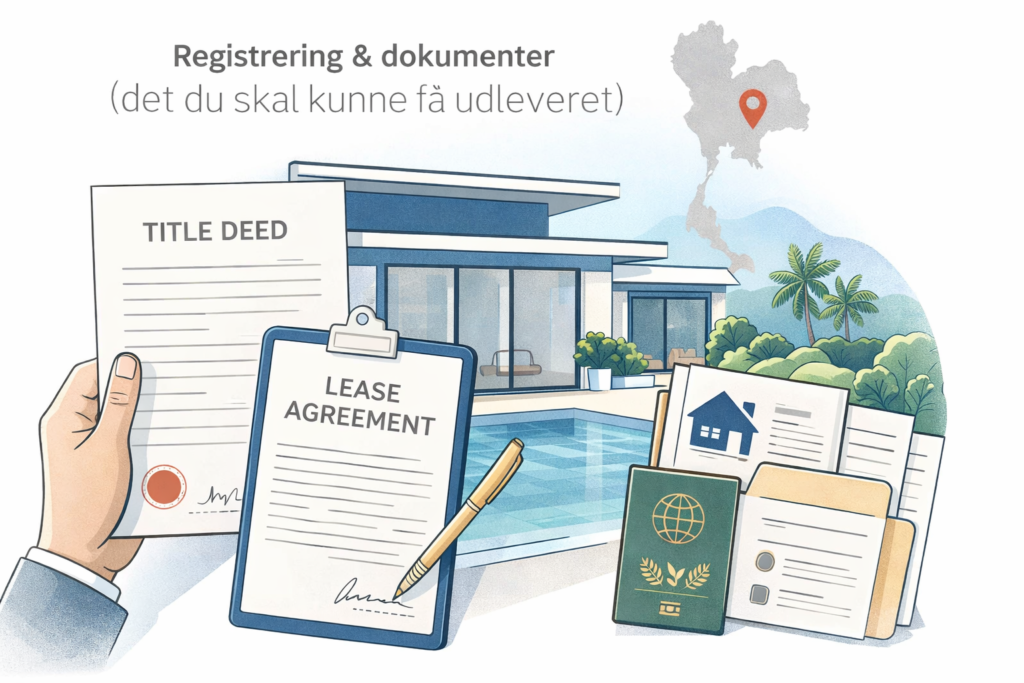
- The signed lease contract (including appendices/drawings, area description, terms and duration)
- Proof of registration (what exactly is registered, when, and by whom)
- Title deed / ownership documentation for the land (so you know what you’re actually leasing on)
- Rental rules (if you plan to rent out): permissions, restrictions, operations and responsibilities
- Fees and operating costs: what is fixed, what can change, and how is it adjusted?
Registration & documents: Make sure you can receive the contract, proof of registration, and relevant title deed documentation – before you sign.
Want a clearer overview of the budget after purchase (running costs/expenses)? See our guide here: Expenses when buying a home in Thailand.
What does leasehold cost in practice? (typical items)
Many people search for “leasehold Thailand costs”. The most important thing is to get a realistic picture of one-time costs and ongoing running costs so you’re not surprised after signing.
- One-time costs: Typically reservation/deposit, legal review (lawyer), contract/translation (if relevant), and fees related to registration and document handling.
- Ongoing running costs: Electricity/water, internet, pool/garden (if relevant), cleaning and maintenance – plus any common fees/management fee depending on the project.
- Buffer: Set aside a fixed buffer for small repairs, replacements and “the unexpected” – especially if you plan to rent out for periods.
If you want to dive deeper into operating budgets and typical expense items, see also: Expenses when buying a home in Thailand.
Leasehold vs other ways to acquire property in Thailand
Leasehold is popular, but it isn’t the only option. Here’s a short, practical comparison so you can quickly assess what typically fits your needs:
| Model | When does it make sense? | Typical focus / “watch out for” |
|---|---|---|
| Leasehold | Holiday home/second home, simple setup, often available in villa projects | Contract terms, registration, rentals/transfer, renewal |
| Freehold condo | If you want to own an apartment directly (condo) and the project meets the rules/quotas | Typically does not apply to detached villas with land |
| Company structure | May be relevant in special cases, but requires a professional setup | Compliance, ongoing administration, legal complexity |
If you want the full step-by-step guide to buying in Thailand, see also: Buying a home in Thailand.
Pros of leasehold
- Often the most straightforward for foreigners: Many projects have a clear model for international buyers.
- Predictability: You get the right of use on agreed terms (when the contract is properly structured).
- Well suited for a holiday home/second home: You can focus on lifestyle rather than complexity.
- Can be combined with rentals: Depending on the contract and the project’s rules, you may be able to rent out for periods.
If you want a private pool and strong privacy value, leasehold is often a model many Scandinavians choose – especially when the home is primarily intended for personal use plus rentals. Want to read about seasons and realistic rental scenarios? See: Renting out in Thailand – realistic scenario + seasons.
Cons and risks (and how to reduce them)
Leasehold can be a great solution – but only when the terms are clear and reasonable. Here are common risks and how to reduce them:
- Unclear rights: Make sure the contract clearly describes right of use, maintenance and responsibilities.
- Renewal/extension: Get it described precisely (if relevant) – and what it costs.
- Transfer/sale: Do you need to be able to sell your leasehold contract later? On what terms?
- Rentals: Is renting allowed, and if so how (short/long term), and who manages the operations?
- Fees/common costs: Get full transparency on operating costs, common fees and maintenance.
Key principle: Everything you “think” you’re allowed to do must be clearly stated in the documents.
Checklist: What must be clear in the contract
Use this checklist as a minimum. If anything is unclear, get it written in – before you sign.

- Duration: Exactly how long does the leasehold agreement apply?
- Registration: How is your right of use registered, and which documents confirm it?
- What’s included: What comes as standard (fixed fixtures, aircon, etc.) – and what is optional?
- Maintenance: Who pays for and is responsible for what (pool, garden, building, installations)?
- Rentals: Are rentals allowed? On what terms? Is short-term rental permitted?
- Transfer: Can you sell/transfer the right of use? Are there fees or requirements?
- Insurance: What do you need to insure yourself, and what is covered via the project (if relevant)?
- Operating costs: What are the fixed monthly/annual costs, and how are they adjusted?
- Default/breach: What happens in case of late payment, damage, or breach of rules?
- Disputes: What process applies in case of disagreement (jurisdiction, mediation, etc.)?
Checklist: Make sure duration, registration, rentals, maintenance, costs and transfer are clearly stated in the contract – before you sign.
Exit: sale/transfer and inheritance (what many forget)
If you’re thinking long-term, it’s worth planning your “exit” already: Can you transfer the leasehold, what does it cost, and how does it work in practice? This is especially important if the home is also seen as an investment or something the family should be able to use later.
- Transfer/sale: Does it require approval from the project/lessor? Is there a transfer fee or admin fee? And can you transfer freely to a new buyer?
- Inheritance/family: If it matters that your spouse/children can take over the right of use, it must be contractually possible and have a clear process.
- Deadlines and process: Clarify it: Which documents are required, how long does it take, and what happens if the process isn’t completed correctly?
Tip: If rentals are part of the plan, “exit” often ties into rental rules and operations. See also: Renting out in Thailand – realistic scenario + seasons.
Due diligence: What your lawyer should review
Your lawyer should review all relevant documents and ensure your rights are clearly described and properly registered. Also ask for a “plain language” explanation of the key points so you know exactly what you’re signing.
We always recommend independent legal advice – and we’re happy to help gather documents and answer questions so your advisor can work efficiently.
Renting out under leasehold – what should you ask?
If you expect to rent out for periods, ask about:
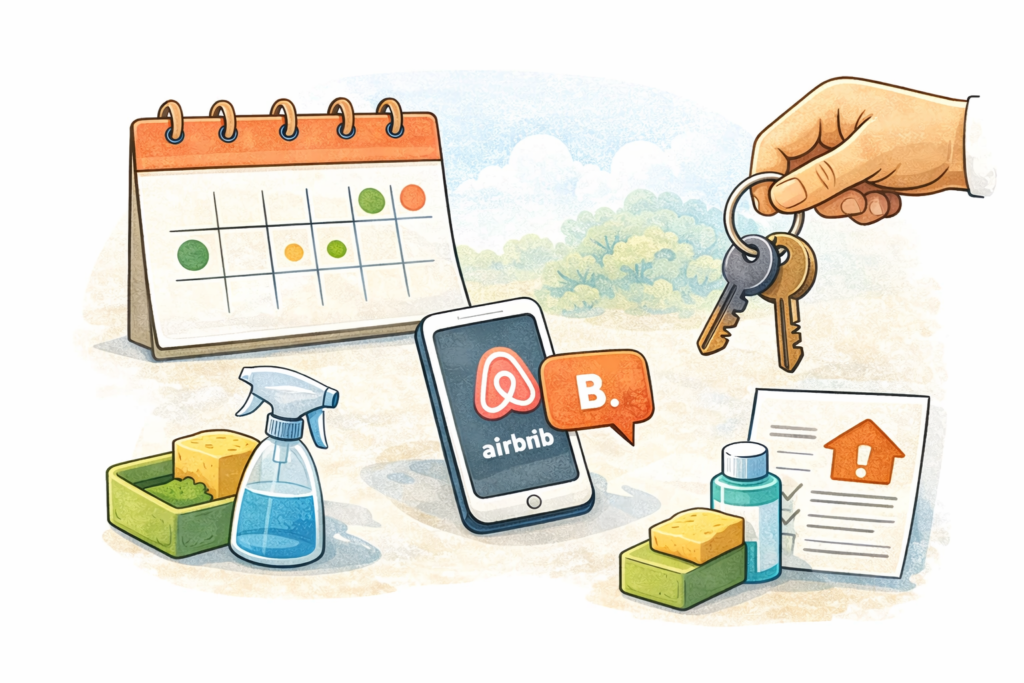
- Are rentals allowed? (and to what extent)
- Short-term vs long-term: Are there restrictions on minimum stay length?
- Operations: Who handles cleaning, key management and check-in?
- Rules: House rules, noise, maintenance, guests, etc.
- Platforms: Can you rent out via Airbnb/Booking.com, or only through your own channel/management?
- Liability and insurance: Who is responsible for damages, accidents and complaints – and what local insurance is required?
Renting out under leasehold: get clarity on rules, operations, check-in and house rules – before you list the home on rental platforms.
If you want a realistic picture of the numbers, ask for a conservative rental scenario (occupancy, price level, expenses). It gives you a stronger basis for decision-making.
FAQ: Leasehold in Thailand
Short answers to common questions people ask when considering leasehold. (For specific purchases, we always recommend independent legal advice.)
What does leasehold mean in Thailand?
Leasehold is a registered lease agreement that gives you the right to use a home (and often an area of land) for a longer period. The terms and security depend on the contract, so always have it reviewed by an independent advisor.
Is leasehold a safe solution for foreigners?
Leasehold can be a good and practical solution if the documents and terms are clear, reasonable and correctly registered. The level of security depends on how the contract is drafted and on due diligence.
Is 30+30+30 (“90 years”) guaranteed in Thailand?
Typically no – “90 years” is often marketed as a 30-year term with an option to renew. Ask whether renewal is a guarantee or an option, what it costs, and how it is documented/registered.
Does leasehold have to be registered – and why is it important?
In practice, registration is important to clearly document your right of use. Ask for proof of what is registered, when, and on what basis, so you’re not relying only on a private agreement.
Can you rent out a leasehold home?
It depends on the contract and the project’s rules. Ask specifically about short-term/long-term rentals, operations and any restrictions – and get it described in writing.
Can I sell/transfer my leasehold later?
It depends on the contract. Some agreements allow transfer under certain conditions or with a fee. Clarify this before you buy, especially if investment/exit matters to you.
What should be clearly stated in a leasehold contract?
Duration, registration, maintenance, rentals, transfer, costs/fees, and dispute resolution. Use the checklist above and have a lawyer review everything.
What costs should I expect with leasehold?
In addition to the home price, there may be ongoing running costs (electricity/water, pool/garden, internet, cleaning), insurance and possibly common fees. Ask for a concrete budget for the home type you’re considering.
What happens when the leasehold term expires?
It depends on the contract and whether an option/right to renew is agreed. Clarify your rights at expiry (renewal, terms, price and process) before you sign.
Can leasehold be inherited?
It depends on the contract and how the right of use can be transferred. If inheritance/transfer matters, it must be clearly stated in the documents and be practically possible to carry out.
See specific homes and prices (main page)
Want to see real photos, price levels (DKK/EUR/THB), standard specifications and options for a free viewing near Sattahip? Head to our main page – everything is gathered there.