
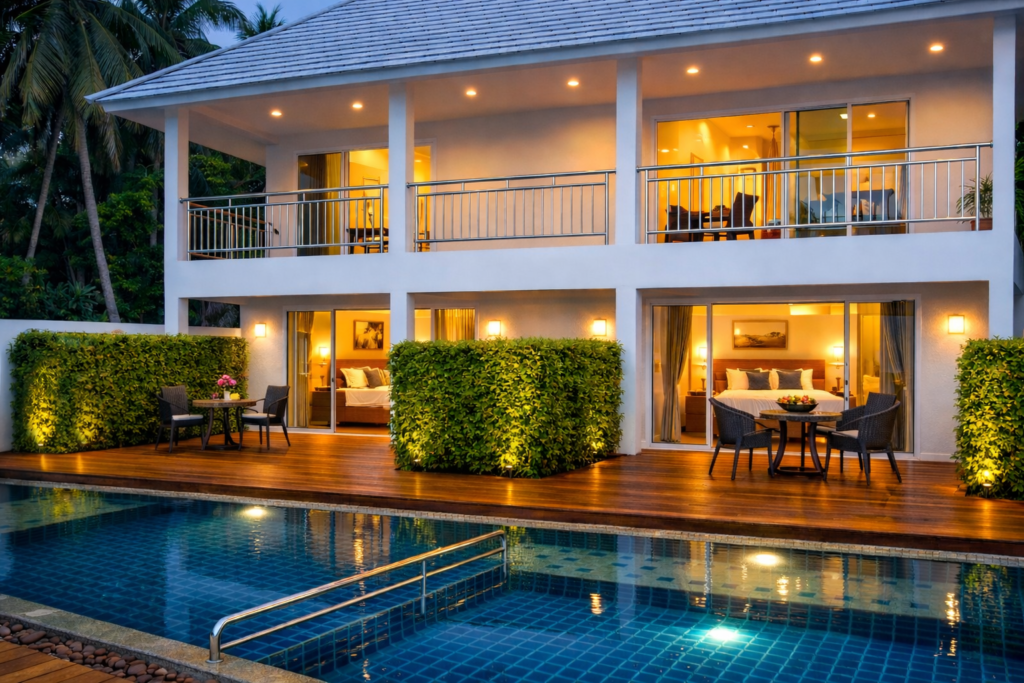
Renting Out Your Home in Thailand – Realistic Scenarios + Seasons
Renting out a home in Thailand can be a great way to make use of your property when you’re not there – but the key is to run the numbers realistically. On this page we cover seasons, a conservative rental scenario, typical costs, and how to avoid the classic mistakes.
What matters most is your occupancy rate, nightly price and your net income after operating costs – not just “what you can get in high season”. Many owners are surprised by how much the operational setup (cleaning, check-in, pool/garden) impacts both reviews and steady income.
Want to understand ownership structures and contracts too? See also: Leasehold in Thailand – Pros/Cons + Checklist.
Want to see a real project with a private pool, a Scandinavian-inspired style and home sizes of 90–120 m² near Sattahip (where renting out can make sense)? Start here:
Seasons in Thailand: High, Shoulder and Low
Demand for holiday rentals typically fluctuates with seasons, public holidays and travel patterns. As a simple rule of thumb, think in three periods:
| Season | Typical demand | What it means for you | Pricing + operations (practical) |
|---|---|---|---|
| High season: Nov–Feb / often into March | Higher demand and often stronger nightly rates. | The best period to lift your average price and secure the most “good weeks” in the calendar. | Raise rates, but keep service standards high (fast response, smooth check-in, reliable cleaning). |
| Shoulder season: March–April + October | Decent demand – typically more price-sensitive. | Small improvements (photos, lighting, privacy) can make a big difference to occupancy. | Use flexible pricing, light promos and minimum stays that fit the market. |
| Low season: May–September | Fewer bookings – depends a lot on property type, operations and the overall “experience”. | Focus on stable operations and realistic expectations. Low season shouldn’t be “what saves the budget”. | Lower price, but optimize operations: cleaning, pool service and key handling must work year-round. |
That’s why it makes sense to build a plan for seasonal pricing and a “minimum operations setup” that works all year (cleaning, pool service, key handling) – even when occupancy is lower.
Tip: Plan your budget using a conservative scenario where low season does not “save” the economics, but is simply a bonus. Create a seasonal pricing plan and a minimum operations setup that runs smoothly year-round (cleaning, pool service, key handling).
Renting out property in Thailand
High season (typically Nov–Feb / often into March)
Better rates and stronger demand – especially during weeks with the most stable weather and the highest number of travelers. Expect Christmas/New Year and peak winter weeks to be the most sought-after, so you can set a higher nightly rate and longer minimum stays.
Operations tip: Make sure check-in, cleaning and pool service can handle higher turnover. Fast response times and sharp photos can significantly improve occupancy in high season.
Shoulder season (typically March–April + October)
More price-sensitive – but still strong opportunities if the home offers privacy, a private pool and a “wow” factor in the photos. Small price tweaks and more flexibility (e.g., shorter minimum stays) can make a big difference.
Operations tip: Use shoulder season to test and refine your setup: self check-in, cleaning workflow, quality standards and house rules. It’s often where you can optimize without sacrificing peak-season revenue.
Low season (typically May–September)
Lower occupancy and more guests comparing prices. You typically win here through stable operations, clear expectations (house rules) and a year-round minimum operations setup.
Operations tip: Schedule maintenance here (painting, minor repairs, deep cleaning), and set a price floor so you don’t “rent at a loss”. Consider longer stays/discounts to reduce turnover costs.
Tip: Plan your budget using a conservative scenario where low season does not “save” the economics, but is simply a bonus.
Realistic Scenario: Conservative vs Optimistic
A realistic rental budget should include at least two scenarios:
- Conservative scenario: Lower occupancy + lower average nightly rate + all costs included (including a buffer).
- Optimistic scenario: Higher occupancy and rates – but still with costs and realistic operating assumptions.
To make your scenarios more useful, also factor in minimum nights, cleaning frequency and a “worst case” with fewer bookings (so you know your pain threshold).
If you plan to use the home yourself during parts of the year, include the fact that “owner use” often takes the best weeks out of the rental calendar. That’s totally fine – but the budget should reflect it.
If you’d like a conservative example budget, message us – we can send a scenario based on our villas near Sattahip:
What Drives Demand? (Pool, View, Privacy)
Certain features consistently show up as strong drivers of demand – especially in the “luxury/privacy” segment:
- Private pool: One of the most requested features – for both families and couples.
- View and overall “experience”: Layout, atmosphere and scenery often convert better in photos.
- Privacy: Screening around the pool/terrace typically increases willingness to pay.
- Style and quality: A modern finish and a “Scandinavian-inspired look” often performs well for Northern European audiences.
This is exactly where many people underestimate the value of “small” details: lighting by the pool, planting that creates calm, and a layout that feels private in photos. The combination of a private pool, a strong experience and good screening often increases both interest and willingness to pay.
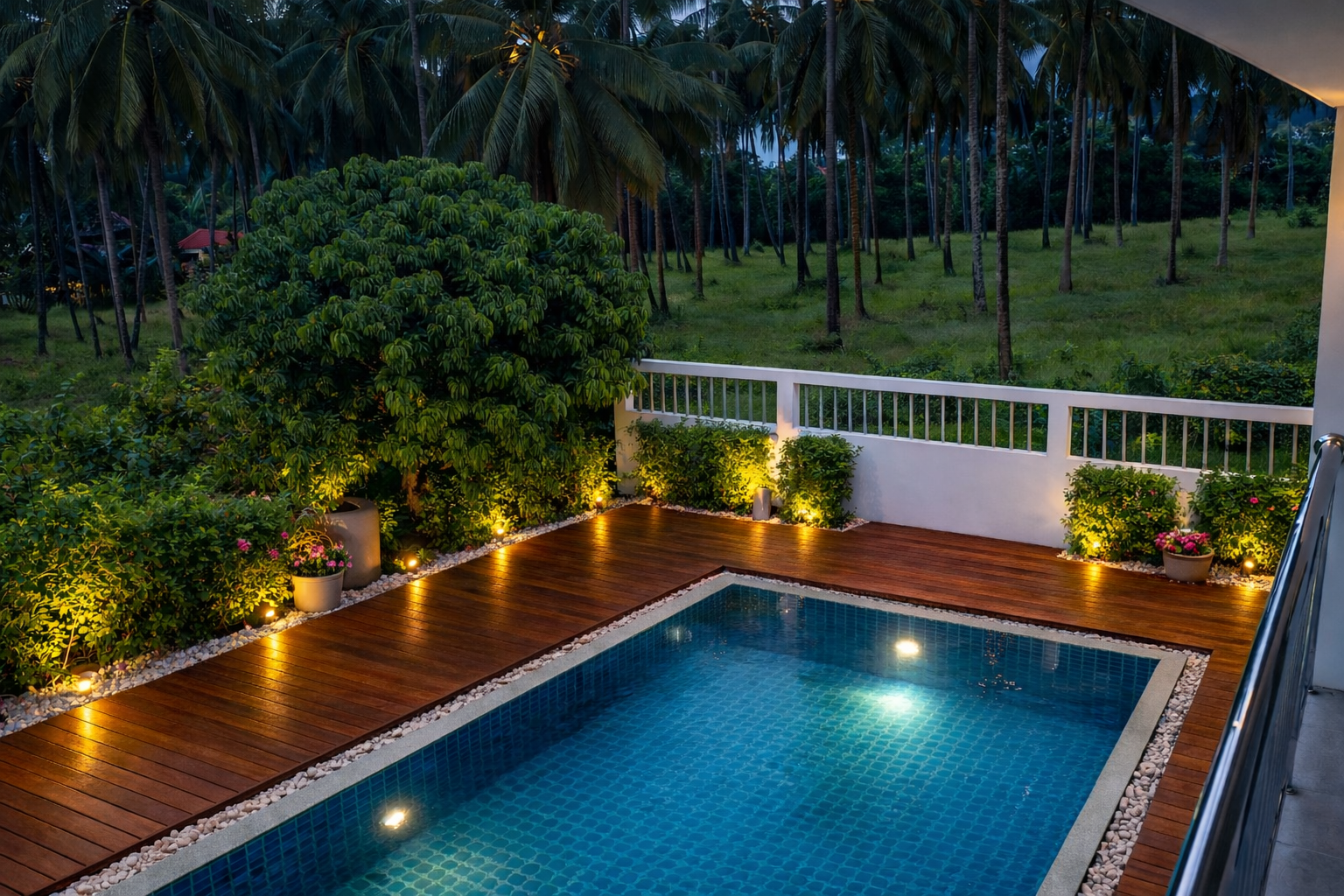
On our main page you can see photos and standard specs, so you can evaluate whether the project matches the type of rental you want:
Rental Costs: What People Forget
The biggest mistakes in rental budgets almost always come from underestimated costs. In particular, remember:
- Cleaning and linen: Often charged per booking + increases with higher occupancy.
- Check-in/key handling: Either hourly cost or handled via management.
- Wear, tear and minor damage: Build in a fixed monthly/annual buffer.
- Pool/maintenance (more frequent): More usage = higher service needs.
- Marketing/platform fees: Varies by platform and setup.
A good rule of thumb is to budget a maintenance/operations buffer, so one month with fewer bookings doesn’t become a problem. It gives peace of mind – and makes it easier to keep a consistent standard, which usually leads to better reviews.
See also our page on purchase costs and operating expenses if you want the full overview: Costs of Buying Property in Thailand.
Operations & Property Management: 3 Models
There are typically three ways to manage rentals:
- DIY: You handle bookings, guest communication and coordination (requires time and local help).
- Partly outsourced: You manage pricing/calendar, while a local partner handles cleaning/check-in.
- Full management: A partner handles most tasks for a fee. Usually the easiest, but more expensive.
The right model depends on how often you’re in Thailand and how hands-on you want to be.
Regardless of the model, make sure service levels and responsibilities are written down (who does what in case of complaints, damage, emergencies). This is where most misunderstandings happen in real life.
Checklist: Questions to Ask Before You Rent
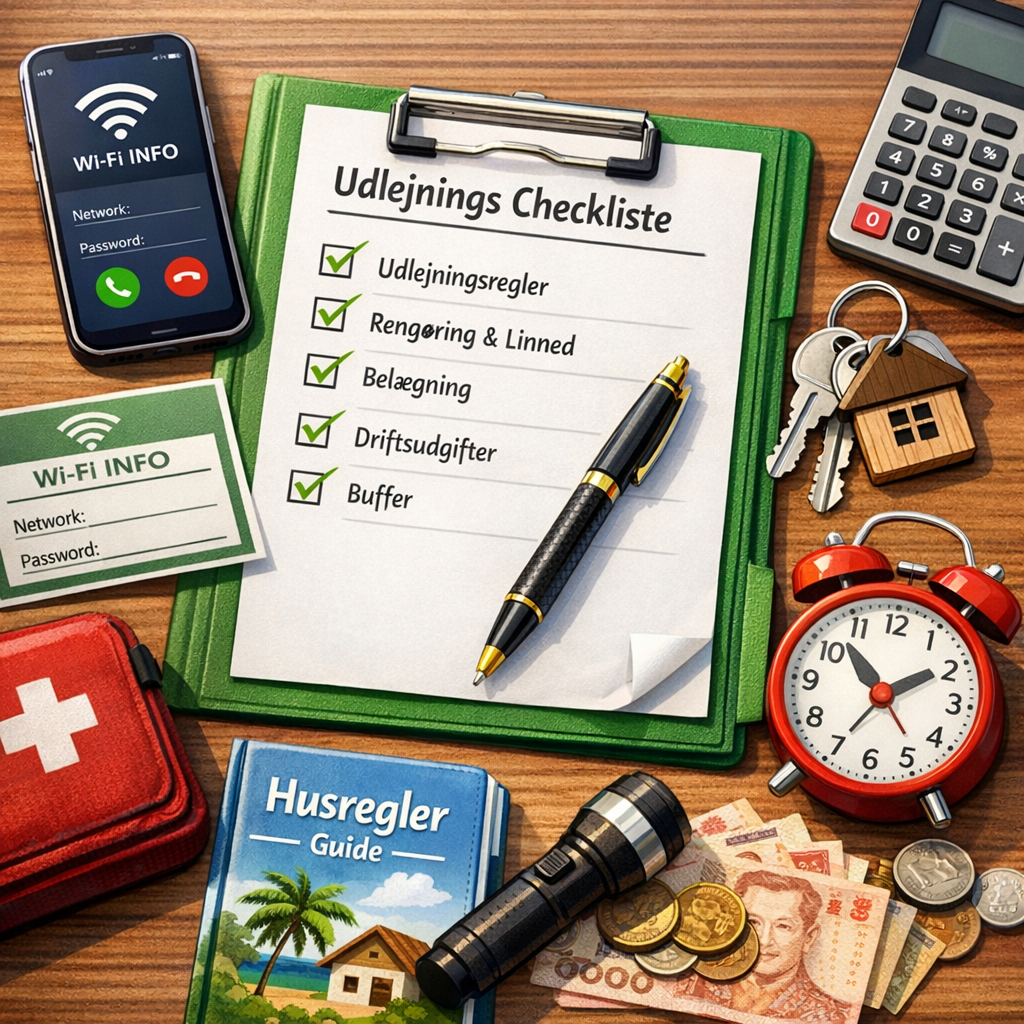
- Is renting out allowed (short/long term) in the contract/project rules?
- Who handles cleaning, linen and check-in – and what does it cost?
- What is a realistic occupancy rate in high/low season for homes like yours?
- Which operating costs increase when you rent out (pool, maintenance, service)?
- Do you have a buffer for minor damage and replacements?
If you want to make things easy, create a simple “operations folder” with: house rules, Wi-Fi info, emergency contacts, manuals (A/C/pool), and a cleaning + inspection checklist. That reduces questions – and reduces bad reviews.
Short-Term Rentals: Platforms, House Rules & “Guest Experience”
If you rent as a holiday home (for example via Airbnb or Booking.com), it’s often the practical details that decide whether you get great reviews – and therefore better visibility and higher rates. Think “rental-ready home” and a clear process before you welcome your first guests.
It can pay to think like a small hotel: standardized cleaning, fast response times, clear house rules and a setup that works even when you’re not in the country. That’s often what creates steady 4.7–5.0 reviews over time.
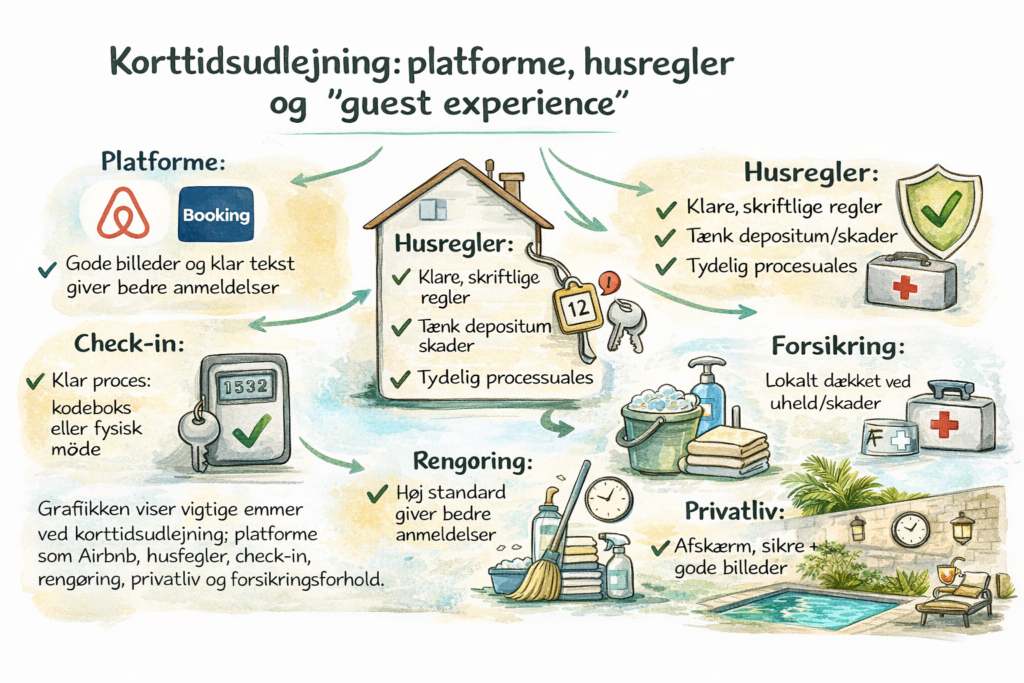
- House rules + deposit: Set clear rules for noise, visitors, smoking, pets and pool use. Consider a deposit or a clear damage/replacement process.
- Check-in/ID and key handling: Will you run self check-in (lockbox/key code) or meet guests in person? Make it simple – especially if you’re not in Thailand.
- Cleaning standard: Guests compare you to hotels. A fixed checklist for cleaning + linen + checking A/C, water pressure and kitchen basics leads to fewer complaints.
- Privacy as a selling point: Hedges/planting, lighting and strong outdoor spaces improve photos – and often increase willingness to pay (see also the common pitfalls if privacy/operations weren’t planned early).
- Insurance and liability: Be clear on what’s covered in case of damage, accidents or theft – and what requires local insurance/optional coverage.
Short-term rentals are all about the details: clear house rules, easy check-in, high cleaning standards, privacy and proper insurance – that’s what drives better reviews and more stable operations.
If you’re considering buying property in Thailand with rentals as part of the plan, make sure rules, operations and your rights are clearly stated in the documents – especially if you use leasehold. See also our step-by-step guide: Buying Property in Thailand.
Which Property Type Performs Best as a Holiday Rental?
If the goal is a holiday home with stable demand, it’s rarely just about square meters – it’s about layout, privacy and whether the home “sells itself” in photos. Here’s what usually moves the needle most:
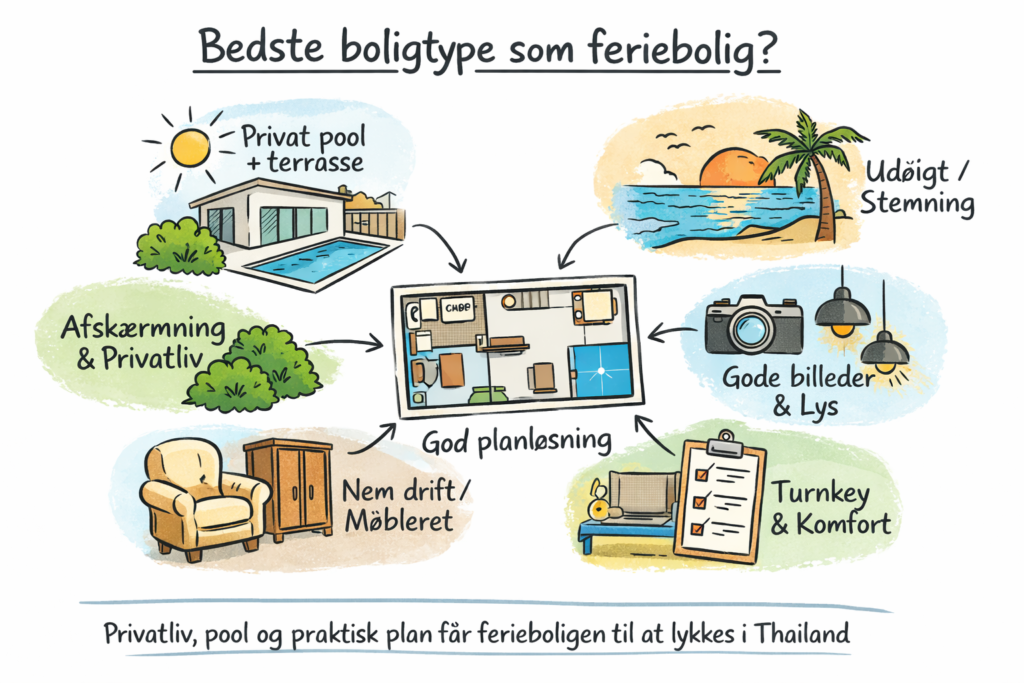
- Private pool + great outdoor areas: A private pool and a terrace that feels screened often make a big difference to click-through rate and nightly price.
- Privacy and landscaping: Hedges, planting and a smart layout create a “resort feel” – and fewer guest complaints (noise/overlook).
- A layout that works in real life: Good storage, proper door widths, easy access to pool/terrace, and a usable kitchen lead to better reviews.
- Lighting and atmosphere for photos: Outdoor lighting, warm evening ambiance and a clean finish often perform better on platforms (also in low season).
- Easy operations: The easier it is to service the pool/garden and manage check-in/cleaning, the more stable your setup becomes over time.
What typically performs best as a holiday rental isn’t the most m² – it’s a private pool, privacy, a smart layout and easy operations (which leads to better photos, reviews and occupancy).
One additional (but important) point: homes with a turnkey / furnished solution and durable materials (tiles, fixtures, textiles) often have fewer operational issues. That improves the guest experience and reduces how much time you spend dealing with “small stuff”.
That’s exactly why many buyers look for areas where it’s realistic to combine privacy, a pool and practical operations. If you want to understand the area better, start here: Sattahip / Bang Saray / Pattaya – Why many people choose the area.
And if you want to avoid expensive mistakes (specs, payment plan, quality checks and handover), see also: Pitfalls when buying/building in Thailand – and for a full view of ongoing costs: Costs of Buying Property in Thailand.
FAQ: Renting Out in Thailand
Short answers to common questions about rentals and seasons. (For specific situations, we always recommend checking local rules and contracts – see also our overview of common pitfalls when buying/building in Thailand.)
When is the high season for rentals in Thailand?
Demand varies, but high season typically falls during the most comfortable weather periods and when more travelers visit. In practice you can often charge a higher nightly rate in high season, but it’s still important to think in yearly averages. Budget conservatively so your finances don’t depend on high season alone – especially if you also block out weeks for your own use.
High season: Nov–Feb / often into March
Shoulder season: March–April + October
Low season: May–September
How do I build a realistic rental scenario?
Create a conservative scenario with lower occupancy and a lower average nightly rate, and include all costs plus a buffer. That makes the scenario robust if there are periods with fewer bookings. Then create an optimistic scenario as a “bonus”, not as the baseline – and be honest about how owner use removes the best weeks from the calendar.
What are the biggest costs when renting out?
Cleaning/linen, check-in/key handling, property management fees (if outsourced), extra maintenance, and a buffer for minor damage. Many owners underestimate the buffer and day-to-day operations because small items (pumps, A/C service, wear on furniture) add up over time. That’s why a fixed monthly operations buffer helps you keep standards stable year-round.
What makes a home more attractive for rentals?
A private pool, a view, privacy, modern finishes and strong photos/overall experience. Often it’s the “wow factor” in photos and a layout that works in practice (easy access to the pool, good storage, a usable kitchen). Screening with hedges/planting and great evening lighting can increase both click-through rate and willingness to pay.
Can I rent it out and still use the home myself?
Yes – it’s a popular strategy: owner use in selected periods and renting out the rest of the year. Just remember owner use often takes the best weeks, so budget accordingly and plan ahead. Many owners lock certain weeks each year and keep the rest as a flexible calendar – that gives both freedom and a more realistic income picture.
Can you send a conservative rental budget for your project near Sattahip?
Yes. Contact us and we’ll send a realistic example with seasonal thinking, operating costs and a conservative scenario. We can also include a simple operations checklist (cleaning, check-in, pool/garden) so you can decide how hands-on you want to be – and what you may prefer to outsource.
See Homes & Prices (Main Page)
Want to see photos, pricing and what’s included as standard – plus options for a free viewing near Sattahip? Visit the main page here:
Useful Links (External)
Here are a few external resources that can be helpful when researching rentals, purchases and practical aspects in Thailand. Use them as inspiration – and always have the specific contracts and rules reviewed for your own situation.
- Siam Real Estate – market overview and listings
- Siam Legal – legal information on buying/contracts
- Tilleke & Gibbins – articles on property/contracts in Thailand
Tip: If you want to avoid common real-world mistakes (payments, quality, handover, operations), also see our guide: Pitfalls when buying/building in Thailand.